
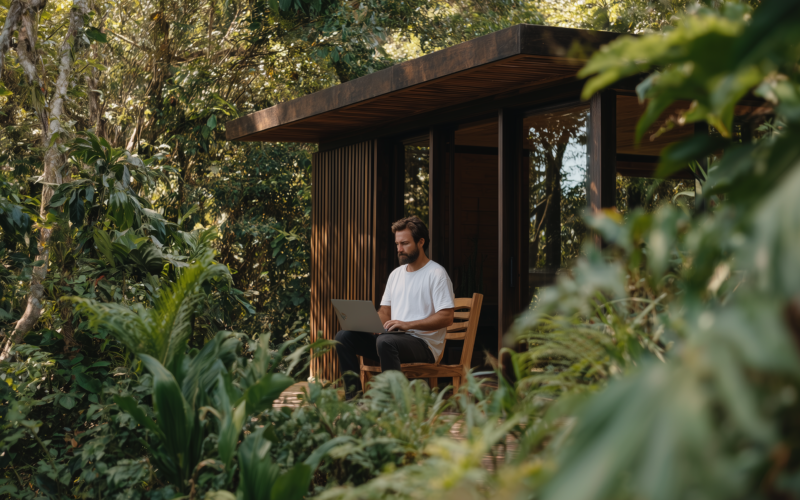
Remote work has changed the way many people think about housing. For decades, living close to a major city was often seen as a practical necessity. People accepted high prices, smaller apartments, long commutes and limited outdoor space because their jobs were tied to offices. The closer a home was to a business district, the more attractive it became.
That logic has weakened. When work can be done from a laptop, the daily commute becomes less important. Many buyers and renters have started to ask a different question: if I do not need to be in the city every morning, why should I pay city prices?
This shift has increased interest in small homes outside major cities. These homes are not always luxury countryside properties. Often they are modest houses in smaller towns, villages, suburban edges or semi-rural areas. Their appeal comes from a combination of affordability, space, privacy and a better work-life balance.
One of the biggest reasons people look outside major cities is price. In many urban markets, housing costs have grown faster than salaries. Even a small city apartment can cost more than a house in a smaller community. Remote work gives people more freedom to compare value. A buyer who once needed to live near an office may now consider a home one or two hours away from the city. In that wider search area, a small house can become more realistic than an urban apartment.
Small homes are especially attractive because they offer a middle ground. They are more affordable than large houses, but they still provide features that many apartments lack: a separate entrance, a small garden, storage space, a parking spot or a quiet room that can become a home office. For people who work remotely, even one additional room can change daily life. It can separate professional tasks from private space and reduce the feeling of living at work.
The demand is not only about saving money. Many remote workers are also looking for a different rhythm of life. After years of crowded transport, expensive lunches, noisy streets and limited living space, smaller communities can feel more manageable. A small home outside the city may offer cleaner air, less noise, easier access to nature and a stronger sense of privacy.
This does not mean everyone wants to leave urban life completely. Many people still value restaurants, cultural events, universities, hospitals and professional networks. But hybrid work has changed the calculation. If a person only needs to visit the office once or twice a week, living farther away becomes more acceptable. The commute is no longer a daily burden but an occasional cost.
This is why small homes near transport links have become particularly attractive. Buyers may not want a remote village with poor infrastructure, but they are interested in towns with train stations, highways, broadband internet and basic services. The ideal location is often not “far from everything,” but “far enough from the city to be affordable and quiet, while still connected.”
Internet quality has become as important as road access. In the past, buyers might have focused on schools, shops and commuting distance. Now they also ask about broadband speed, mobile coverage and power reliability. A beautiful small house loses much of its appeal if video calls fail or cloud-based work is impossible. For remote workers, digital infrastructure is part of the property’s value.
The interior layout of small homes has also become more important. Before remote work became common, a small house might be judged mainly by bedroom count, kitchen condition and outdoor space. Today, buyers look for flexible corners that can support work. A spare bedroom, converted attic, garden studio or even a wide hallway with natural light can become a selling point.
This has changed renovation priorities. Owners of small homes outside major cities may now invest in insulation, heating, lighting, soundproofing and built-in desks. These improvements do not always look dramatic in photos, but they matter to remote workers who spend many hours at home. Comfort during the working day has become part of housing demand.
The growth of remote work has also affected emotional expectations. A home is no longer just a place to return to after work. For many people, it is also an office, meeting room, lunch space, creative zone and recovery area. This makes the surrounding environment more important. A small garden, a quiet street or a nearby walking path can influence the decision as much as a modern kitchen.
There are also risks in this trend. Some buyers may underestimate the difference between visiting a small town on weekends and living there full time. Local services may be limited. Public transport may be less frequent. Social life may be quieter. Healthcare, childcare and schools may require longer travel. A lower purchase price does not automatically mean a better life.
Another challenge is that rising demand can increase prices in smaller communities. When remote workers with city salaries enter lower-cost markets, local residents may face stronger competition. This can create tension, especially in towns where housing supply is limited. What looks affordable to someone leaving a major city may be expensive for people who already live there.
There is also the question of long-term job security. Remote work policies can change. A company may later require employees to return to the office more often. A buyer who moved far from the city may then face a difficult commute or need to change jobs. This is why many people prefer small homes within reasonable distance of urban centers rather than completely remote locations.
For sellers, the trend creates new opportunities. A small home outside a major city can be marketed not only as a cheaper alternative, but as a practical remote work property. Good internet, a quiet room, energy-efficient heating, natural light and outdoor space should be clearly presented. These features may matter more than traditional luxury details.
For buyers, the most important lesson is to think beyond price. A small home can be a smart choice if it supports both work and daily life. The buyer should check internet reliability, heating costs, transport options, local services, noise levels and the real usability of the workspace. A house that looks charming may not be suitable for eight hours of work every day.
Remote work has not destroyed the appeal of major cities, but it has weakened their monopoly over professional life. Many people can now separate career opportunity from city-center housing. This has made small homes outside major cities more desirable, especially for those who want affordability, privacy and a healthier daily routine.
The demand is likely to continue as long as flexible work remains common. The most successful small homes will be those that combine three qualities: a reasonable price, a comfortable work environment and reliable connection to the wider world. In the new housing market, a small house outside the city is no longer only a compromise. For many remote workers, it has become a deliberate choice.